Medical Billing Audit Checklist: 15 Things Every Practice Should Review Before Revenue Slips Away
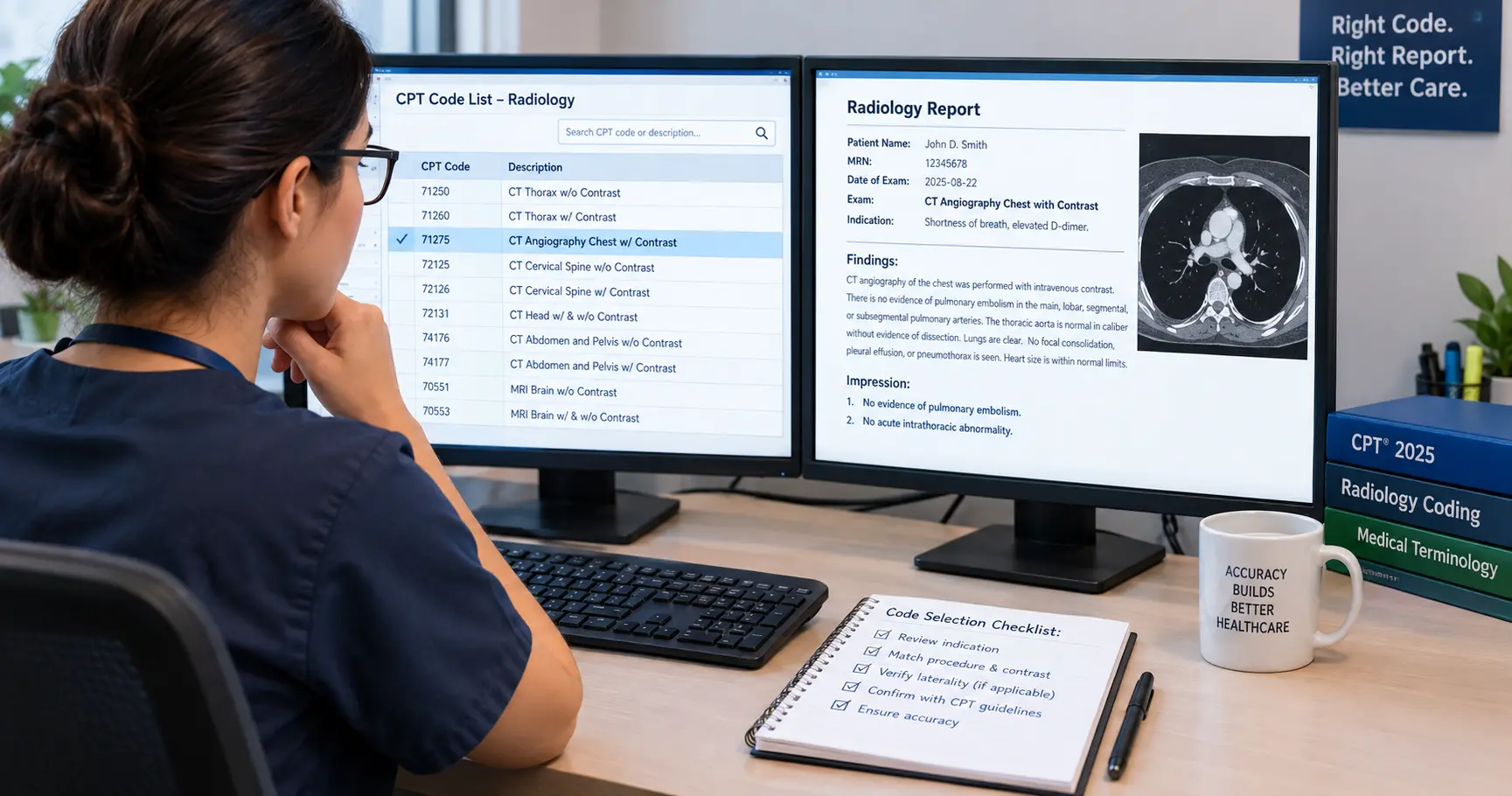
A medical billing audit checklist walks the full revenue cycle, from patient eligibility through reporting and KPIs, to find where a practice is losing earned revenue. This guide covers the 15 areas every practice should review, how to spot leakage during an audit, and how often to run one.

Most practices find out their billing has a problem the same way: a denial trend that's been building for months finally shows up in a bank balance that doesn't match expectations. A medical billing audit checklist exists to catch that problem earlier, while it's still a documentation gap or a missed eligibility check rather than a quarter of lost revenue.
A well-run audit checklist walks the full revenue cycle to find leakage, from the moment a patient schedules an appointment through the moment a claim is fully paid and posted. It's not a one-time compliance exercise. It's a structured way of asking the same question CMS and commercial payers are already asking behind the scenes: does the documentation support what was billed, and did the practice actually collect everything it was owed?
This guide covers what a medical billing audit actually involves, the 15 specific areas every practice should review, how to spot revenue leakage while you're auditing, and how to decide between handling the audit internally or bringing in outside support.
What Is a Medical Billing Audit?
A medical billing audit is a systematic review of a practice's billing and coding processes, checking whether claims accurately reflect the services documented, whether they were submitted correctly, and whether the practice collected the full, correct reimbursement it was owed under each payer contract.
Audits generally fall into two categories. A compliance audit checks whether coding and documentation meet payer and regulatory requirements, the kind of review a practice runs to reduce audit and overpayment risk from CMS or commercial payers. A revenue cycle audit, which is the focus of this guide, checks the full billing workflow for operational breakdowns that cause a practice to lose earned revenue, denials that were never worked, underpayments that went unnoticed, eligibility checks that got skipped. Many practices need both, and the two overlap more than they differ, since a documentation gap that creates compliance risk is often the exact same gap that's also causing a denial.
Why Practices Should Audit Their Billing Workflow
Billing problems rarely show up as one obvious event. They accumulate in small, repeated ways across eligibility checks, coding decisions, claim submissions, and follow-up work, and by the time they're visible in a practice's overall financial performance, months of preventable loss have usually already happened.
Industry data backs this up consistently. MGMA benchmarking data has shown median claim denial rates in the range of 11 to 12 percent of submitted claims, and a meaningful share of denied claims are never reworked at all. HFMA's clean claim rate benchmarking shows a wide range across practices, with well-run revenue cycle operations reaching the high 90s and weaker operations falling well below that. Every percentage point below a strong clean claim rate means more rework, slower payment, and more staff time spent fixing problems that a regular audit would have caught earlier.
A January 2026 MGMA Stat poll asked medical group leaders where they see the most revenue leakage in their own organizations, and denials and appeals topped the list, followed by front-end issues, billing and collections problems, coding errors, and charge posting gaps. That spread is exactly why a billing audit checklist needs to cover the full revenue cycle rather than focusing narrowly on coding or claims alone. A practice that only checks its coding accuracy can still be losing significant revenue to eligibility gaps or unworked denials it never looked at.

The Medical Billing Audit Checklist: 15 Areas to Review
An audit checklist walks the full revenue cycle to find leakage, which means reviewing each of the following areas rather than sampling just one or two.

1. Patient Eligibility
Confirm that eligibility and benefits are being verified close to the actual date of service, not just at initial scheduling. Coverage can lapse or change between when a visit is scheduled and when it happens, and an outdated eligibility check is one of the most common, most preventable causes of denial.
2. Provider Enrollment
Check that every provider billing under the practice is actively enrolled with every payer the practice bills. A claim submitted under a provider whose enrollment isn't active with that specific payer gets denied regardless of how accurate the coding was.
3. Coding Accuracy
Review a sample of recent claims against the underlying clinical documentation. The code billed should accurately reflect the service actually performed and documented, not overstate or understate it. Coding drift, small inaccuracies that creep in over time as staff turn over or payer rules change, is one of the harder problems to catch without a deliberate review.
4. Modifiers
Confirm that modifiers are being applied correctly and consistently. Missing or incorrect modifiers, particularly around professional and technical component billing or bundling edits, are a frequent and avoidable source of denials and underpayments.
5. Charge Capture
Audit documented services against what was actually billed. A missed charge, a service genuinely performed but never submitted as a claim, never even generates a denial. It just disappears from revenue entirely, which makes charge capture one of the easiest leaks to overlook.
6. Claim Submission
Review how claims are scrubbed before submission. Are errors, missing information, mismatched codes, incomplete demographics, caught before the claim goes out, or is the practice relying on denials to catch these problems after the fact?
7. Denials
Look at denials by category and root cause rather than treating each one as an isolated event. What share of denials actually get reworked and resubmitted, and what share get written off? Industry data consistently shows a large percentage of denied claims are never appealed at all, even when they're genuinely recoverable.
8. Timely Filing
Confirm claims and appeals are being submitted within each payer's specific filing window. Original Medicare claims generally must be filed within twelve months of the date of service under CMS guidance, and commercial payer deadlines vary, often considerably shorter. Once a filing deadline passes, a recoverable claim becomes a permanently lost one.
9. Payment Posting
Check that payments and adjustments are being posted accurately and promptly from remittance advice documents. Posting errors can mask real problems elsewhere in the cycle, since a miscoded adjustment can make an underpayment look like a correct payment.
10. Underpayments
Compare a sample of actual payments received against the practice's contracted fee schedule for those same services. Underpayments are easy to miss because a payment did arrive, it just wasn't the right amount, and without a systematic comparison against contracted rates, this kind of leakage can continue for months unnoticed.
11. A/R Follow-Up
Review how consistently outstanding claims are being followed up on, and how far claims are aging before anyone works them. MGMA benchmarking has shown median Days in A/R in the mid-40s for typical practices, compared to the mid-30s or lower for top performers, a gap that represents real cash sitting uncollected.
12. Payer Contracts
Confirm the practice actually has current copies of its contracted fee schedules and terms for each payer, and that billing staff have access to them. It's difficult to catch an underpayment against a contract nobody can easily reference.
13. Documentation
Check whether clinical documentation actually supports the codes being billed, with enough specificity to withstand a payer audit. This is the area where compliance risk and revenue leakage overlap most directly, since undocumented services can't be billed, and inadequately documented ones can trigger recoupment even after payment.
14. Credentialing
Review credentialing status and renewal timelines for every provider, since credentialing delays and lapses are a common cause of claims being denied or held. Manual credentialing processes have historically taken anywhere from 90 to 180 days, and a lapse that goes unnoticed can quietly stop a provider's claims from being paid until it's caught.
15. Reporting and KPIs
Confirm the practice has ongoing visibility into its own key performance indicators, Days in A/R, clean claim rate, denial rate by payer and reason, and net collection rate, rather than only looking at these numbers when something has already gone wrong. A practice that doesn't track its own KPIs regularly has no early warning system for the other fourteen items on this list.
How to Identify Revenue Leakage During a Billing Audit
Finding revenue leakage during an audit means looking for patterns, not just isolated errors. A single denied claim or one missed charge doesn't tell you much on its own. The signal is in what repeats.
Start with denial analysis by category and root cause rather than reason code alone, since several different reason codes often point back to the same underlying process gap. Run a payment variance check comparing actual remittances against contracted rates across a meaningful sample of claims, not just the ones that look obviously wrong. Review A/R aging to see which claims are drifting toward their timely filing deadline without any documented follow-up. Break down denial and underpayment patterns by individual payer, since leakage often concentrates disproportionately in one or two payer relationships rather than spreading evenly. And audit charge capture against clinical documentation to catch services that were performed but never made it onto a claim at all.
None of these checks are complicated individually. What makes them effective is doing them together, on a regular schedule, rather than investigating only after a problem has already become visible in the practice's financials.
Common Problems a Billing Audit Can Uncover
Practices that run a full audit for the first time are often surprised by what turns up, not because the problems are exotic, but because they're the kind of small, repeated issues that don't trigger any single alarm on their own.
- Eligibility checks that are stale by the date of service, causing avoidable denials for coverage that had already lapsed.
- Coding patterns that drifted over time, often tied to staff turnover or a payer policy change nobody updated internal guidance for.
- Denials that were never worked, sitting in A/R until they aged past any realistic chance of recovery.
- Underpayments accepted as correct, because no one was comparing actual payments against the contracted fee schedule.
- Credentialing gaps, where a provider's enrollment with a specific payer lapsed and nobody caught it until claims started denying.
- Missed charges, documented services that never generated a claim at all.
- Inconsistent modifier use, particularly across different billers handling the same service types differently.
Individually, each of these looks like a minor operational gap. Across a full year of claims, they're exactly the kind of pattern that adds up to meaningful, preventable revenue loss.
How Often Should a Medical Practice Conduct a Billing Audit?
Most compliance guidance points to at least an annual audit as a baseline, but an annual review alone often catches problems well after they've already cost the practice real money. A more effective approach layers a few different audit types at different intervals.
A smaller, focused review, checking a sample of recent claims for coding accuracy, denial trends, and eligibility verification, works well on a quarterly basis, since it catches drift while it's still small. A full audit across all fifteen areas in this checklist makes sense annually at minimum, and more often for practices that are growing quickly, adding new providers, or entering new payer contracts, since each of those changes introduces new opportunities for something to be missed. Practices should also consider a focused audit any time a KPI moves in the wrong direction unexpectedly, a rising denial rate or a climbing Days in A/R number is usually the first visible sign that something upstream needs a closer look.
In-House vs. External Medical Billing Audit
Both approaches can work, and the right choice usually depends on internal bandwidth and how much independent perspective the practice actually wants.
An in-house audit, run by practice staff or an internal compliance lead, has the advantage of deep familiarity with the practice's own systems and payer mix, and it can be done without an outside engagement. The tradeoff is that staff auditing their own team's work can miss problems they're too close to see, and a busy internal team often doesn't have the bandwidth to audit all fifteen areas thoroughly on a consistent schedule.
An external audit, run by an independent billing or RCM company, brings a genuinely outside perspective and benchmarking against industry norms the practice might not otherwise have visibility into. It also tends to be more thorough, simply because it's the auditor's primary task rather than one more responsibility layered onto an already busy billing team. The tradeoff is cost, and the practice needs to choose a partner who understands its specific specialty and payer mix rather than applying a generic checklist.
Many practices land on a hybrid approach: quarterly internal spot checks handled by staff, paired with a more thorough external audit annually or whenever a major operational change, like a new EHR, a new payer contract, or rapid growth, makes an outside review worth the investment.
How RCM Support Can Help Practices Maintain Billing Accuracy
A billing audit is only useful if the findings actually turn into fixed processes. Practices that run an audit, find real issues, and then go back to business as usual without changing anything tend to find the same problems again at the next audit.
This is where ongoing revenue cycle management support genuinely helps, not as a replacement for periodic audits, but as the mechanism that keeps a practice from drifting back into the same gaps between them. Continuous eligibility verification, coding review, denial management, and A/R follow-up catch the kind of small, compounding issues an annual audit would otherwise only find well after the fact. Edge RCM, based in Reisterstown, supports medical practices with this kind of ongoing oversight across billing accuracy, claims management, denial management, credentialing, and accounts receivable follow-up, the same fifteen areas this checklist covers, monitored continuously rather than reviewed once a year. For practices that have just completed their first full audit and found more issues than expected, that's usually the moment ongoing RCM support makes the most sense, since it's far easier to maintain a clean billing process than to keep rediscovering the same leaks.
Medical Billing Audit FAQs
What is a medical billing audit checklist?
A medical billing audit checklist is a structured list of the areas a practice should review to confirm its billing process is accurate and complete, covering everything from patient eligibility and coding accuracy through denials, underpayments, credentialing, and reporting.
How long does a medical billing audit take?
It depends on practice size and how many of the fifteen areas are being reviewed. A focused quarterly check on a sample of claims can take a few days, while a full annual audit across the entire revenue cycle typically takes several weeks, especially if it includes a external partner unfamiliar with the practice's systems.
What's the difference between a compliance audit and a revenue cycle audit?
A compliance audit checks whether coding and documentation meet payer and regulatory requirements. A revenue cycle audit checks the full billing workflow for operational gaps causing lost revenue. The two overlap significantly, since documentation gaps often cause both compliance risk and denials.
Can a small practice run its own billing audit?
Yes, especially for a focused quarterly review of a claims sample. A full audit across all fifteen areas is harder to do thoroughly without dedicated time or outside support, since staff auditing their own daily work can miss problems they're too close to see.
What's the most commonly missed area in a billing audit?
Underpayments and missed charges are commonly overlooked, since both are less visible than denials. An underpayment looks like a completed transaction unless it's actively compared against the contracted fee schedule, and a missed charge never generates any signal at all because it was never submitted as a claim.
Conclusion
A medical billing audit checklist works because it forces a practice to look at its revenue cycle as one connected system rather than a set of separate tasks handled by different people with different priorities. Eligibility, coding, claims, denials, payments, and credentialing all feed into each other, and a gap in any one of them can quietly erode revenue that a practice earned but never actually collected.
Running through all fifteen areas on a regular schedule, rather than waiting for a KPI to move in the wrong direction, is what actually catches leakage while it's still small and recoverable. For practices unsure where to start, the areas most worth prioritizing first are usually denials, underpayments, and A/R follow-up, since MGMA's own data points to these as the largest sources of leakage across medical groups.
Edge RCM CTA
If your practice has never run a full audit across all fifteen of these areas, that's usually the first sign it's worth doing. Edge RCM, based in Reisterstown, works with medical practices to review the full revenue cycle, from patient eligibility through reporting and KPIs, and to identify exactly where earned revenue is slipping through before it adds up to a real financial impact. Whether you need a one-time audit or ongoing revenue cycle support to keep the gaps from reopening, Edge RCM can help you find out where your practice actually stands.