Revenue Leakage in Medical Practices: Common Causes and How to Prevent Lost Reimbursement
Revenue leakage occurs when a healthcare practice loses money it has already earned, through eligibility gaps, coding errors, denials, underpayments, missed charges, and unworked accounts receivable. This guide explains what revenue leakage actually is, where it commonly happens, how to spot it, and how Maryland medical practices can build a systematic approach to preventing it.

Revenue leakage occurs when a healthcare practice loses money it has already earned, income for services genuinely delivered that never actually gets collected. Industry data converges on a consistent range: preventable breakdowns across the revenue cycle cost the average medical practice somewhere between 3 and 5 percent of net patient revenue every year, according to multiple independent 2025 and 2026 analyses. For a practice collecting $2 million annually, that's tens of thousands of dollars disappearing quietly, not in one dramatic loss, but across dozens of small, repeatable gaps spread throughout the billing process.
Revenue leakage is the silent bleed of medical practices, precisely because it rarely shows up as a single line item anyone notices. For practices across Maryland, from Baltimore and Bethesda to Columbia, Frederick, and Salisbury, understanding revenue leakage as a systemic pattern, rather than a collection of unrelated billing mistakes, is what actually makes it possible to find and close.
What Is Revenue Leakage in a Medical Practice?
Revenue leakage is earned income that a practice never actually collects. It's distinct from bad debt, money a patient genuinely can't pay, and distinct from a legitimate clinical write-off. Leakage specifically refers to reimbursement a practice was contractually entitled to receive for care it actually delivered, lost because a process step somewhere between the front desk and the final payment failed.
That distinction matters because it reframes the problem. Revenue leakage isn't primarily a clinical issue or a patient-collections issue. It's a process integrity issue, and it accumulates specifically in the gaps between departments, scheduling, clinical documentation, coding, billing, and follow-up, rather than within any single one of them.
Where Medical Practices Commonly Lose Revenue
Revenue leakage rarely comes from one source. It accumulates across several recurring categories simultaneously.
- Eligibility and coverage issues, when a patient's insurance status has changed between scheduling and the actual visit, resulting in a claim submitted against coverage that's no longer active.
- Coding and documentation errors, when the code billed doesn't accurately reflect the documented service, either understating or overstating what was actually performed.
- Claim denials, covering the full range of causes from authorization gaps to medical necessity disputes.
- Underpayments, when a payment arrives but doesn't match the actual contracted rate for that service, and the shortfall goes unnoticed because a payment was technically received.
- Missed charges, services genuinely performed but never actually captured on a claim at all, a documented procedure that simply never made it into the billing system.
- Timely filing problems, claims submitted after a payer's filing deadline, converting a recoverable claim into a permanently lost one.
- Unworked accounts receivable, denied or unpaid claims that simply sit without follow-up until they age past any realistic chance of recovery.
- Credentialing and enrollment problems, claims submitted under a provider whose enrollment wasn't actually active with that specific payer.

Each of these has real depth worth understanding on its own. Our dedicated guides on insurance eligibility verification, Medicare claim denials, and timely filing go deeper into each individual cause. This guide focuses on how they collectively add up to a much larger, often invisible revenue problem.
How Small Billing Problems Turn Into Revenue Loss
A single wrong digit in an insurance ID. A missing modifier. A denial code left uncategorized and never actually worked. Individually, none of these look like a serious problem. A practice can absorb one denied claim without noticing any real financial impact.
The issue is repetition and compounding. The same small error, an outdated eligibility check, a coding shortcut, a denial that sits unworked, repeats across dozens or hundreds of claims a month. Lack of contract management or awareness of contract terms means a practice can accept underpayments for months without ever comparing what arrived against what was actually owed. None of these individual failures triggers an alarm. Together, spread across a full year of claims, they add up to the 3 to 5 percent of net revenue that industry data consistently shows disappearing from practices that aren't actively watching for this pattern.
Common Signs Your Practice Has Revenue Leakage
- Increasing accounts receivable that doesn't correspond to a genuine increase in patient volume.
- Frequent denials, particularly when the same denial reason keeps recurring without ever being addressed at its root cause.
- A low clean claim rate, meaning a meaningful share of claims require correction before they can even be processed.
- Unexplained payment differences between what was billed, what was contracted, and what actually arrived.
- Old unpaid claims that have been sitting without any documented follow-up activity.
- Repeated payer-specific issues, the same problem surfacing consistently with one particular payer relationship, suggesting a workflow gap specific to that contract or its requirements.

Practices in growing Maryland markets like Frederick or Waldorf, where patient volume is increasing year over year, should watch this pattern particularly closely, since rising A/R can hide inside genuine growth if it isn't tracked as a distinct, separate trend.
Revenue Leakage vs. Claim Denials: What's the Difference?
These terms get used interchangeably, and that's a mistake worth correcting. A denial is a specific, visible event: a payer reviews a claim and explicitly refuses payment, generating a reason code and a clear point of follow-up. Revenue leakage is broader and often far less visible. An underpayment produces none of the signals a denial does, the payment arrives, it looks like resolution, and nothing flags that it's actually below the contracted rate. A missed charge never generates a denial at all, because it was never submitted as a claim in the first place.
Denials are one visible category within the larger revenue leakage problem, not a synonym for it. A practice can have a genuinely low denial rate and still be leaking meaningful revenue through underpayments, missed charges, and unworked older claims that never even reached the denial stage.
How Practices Can Identify Revenue Leakage
- Denial analysis, reviewing denials by category and root cause rather than treating each one as an isolated, unrelated event.
- Payment variance checks, systematically comparing actual payments received against contracted rates, rather than accepting whatever amount arrives as correct by default.
- A/R aging review, identifying which claims are aging without follow-up and how far they've drifted from timely filing deadlines.
- Payer-level analysis, breaking down denial and underpayment patterns by specific payer, since leakage often concentrates disproportionately in one or two payer relationships.
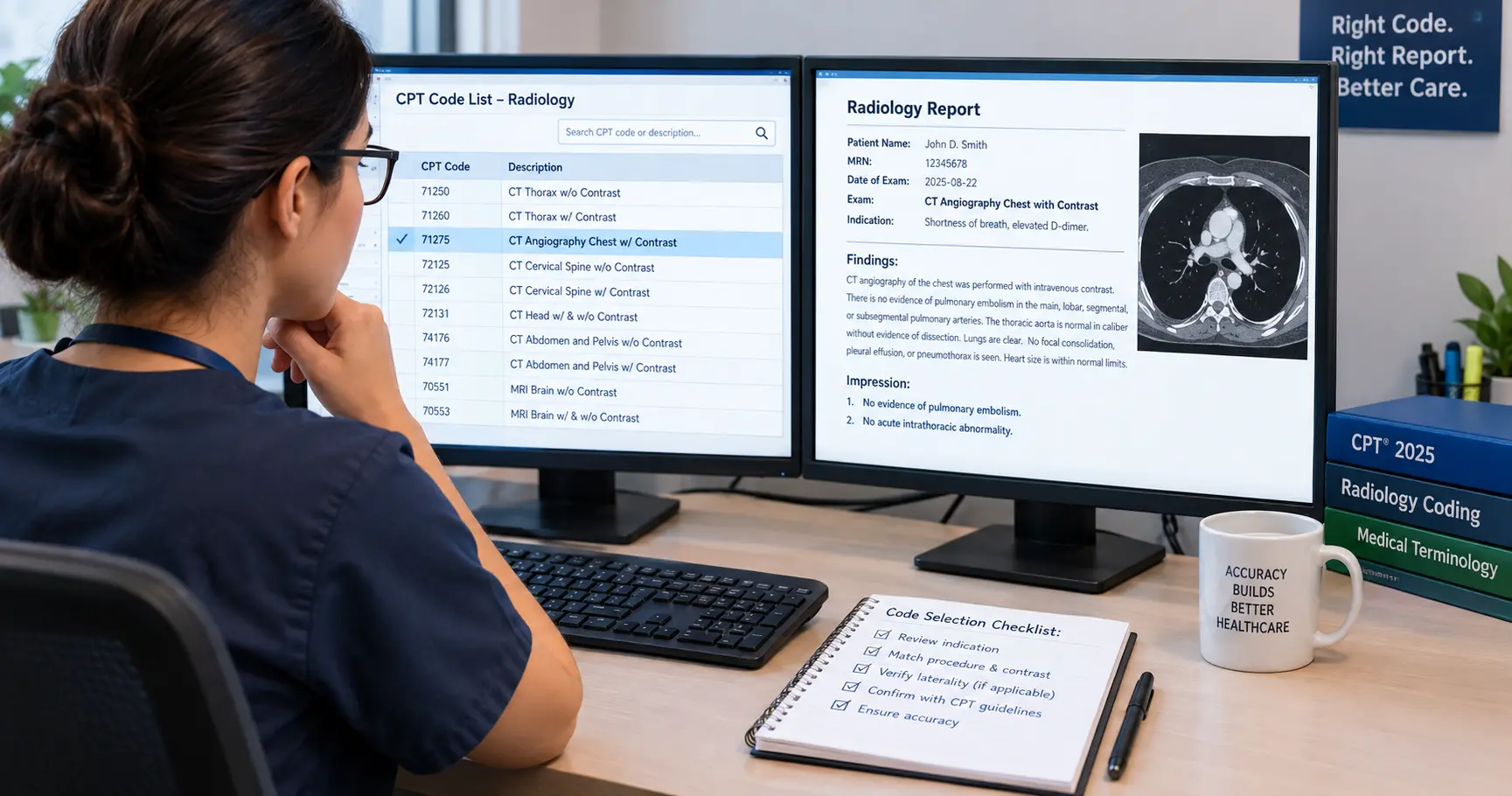
- Charge capture review, auditing documented services against what was actually billed to catch services that were performed but never submitted as claims.
- Timely filing monitoring, tracking claims approaching each payer's specific filing deadline before they convert from delayed to permanently unrecoverable.
How to Prevent Revenue Leakage
- Strong eligibility verification, confirmed close to the actual date of service rather than only at scheduling.
- Accurate coding, supported by documentation that genuinely matches what was billed.
- Clean claim processes, catching errors before submission rather than relying on post-denial correction.
- Regular accounts receivable follow-up, on a consistent schedule rather than reactive, ad hoc attention.
- Payer contract and payment review, auditing actual remittances against contracted terms on an ongoing basis.
- Credentialing maintenance, keeping provider enrollment current and active across every payer relationship, not just at initial onboarding.
- Monitoring key performance indicators consistently, rather than reviewing revenue cycle health only when a problem has already become obvious.
Auditing billing workflows regularly, on a set schedule rather than only when something feels wrong, is what actually catches leakage while it's still small. Practices across Howard County, Anne Arundel County, and other Maryland communities managing a mix of commercial, Medicare, and Medicaid payers benefit especially from this kind of regular, structured review, since a wider payer mix means more distinct places for small process gaps to develop independently of each other.
How Medical Billing and RCM Support Revenue Leakage Prevention
Preventing revenue leakage depends on treating billing accuracy, claims management, denial follow-up, and accounts receivable monitoring as one connected system rather than separate, disconnected tasks handled by different people with different priorities. Edge RCM, based in Reisterstown, supports medical practices across Maryland with exactly this kind of integrated approach, billing accuracy, claims management, denial management, accounts receivable follow-up, and reimbursement monitoring, built to catch the kind of small, compounding gaps that individually seem minor but collectively account for a meaningful share of a practice's lost revenue. For practices unsure whether their own revenue leakage falls within, above, or below the typical 3 to 5 percent range, a structured review across these functions is usually the fastest way to find out.
Frequently Asked Questions
What is revenue leakage in a medical practice?
Revenue leakage is earned income that a medical practice never actually collects, caused by gaps such as eligibility errors, coding mistakes, unresolved denials, underpayments, missed charges, and aged, unworked accounts receivable.
How much revenue do medical practices typically lose to leakage?
Multiple independent industry analyses converge on a range of 3 to 5 percent of net patient revenue lost annually to preventable revenue cycle breakdowns, with some sources citing a wider range up to 7 percent depending on practice type and payer mix.
What's the difference between revenue leakage and a claim denial?
A denial is a specific, visible event where a payer explicitly refuses payment on a claim. Revenue leakage is the broader category, including denials but also underpayments, missed charges, and other losses that often produce no clear signal at all.
Where does revenue leakage most commonly start in a practice?
A January 2026 MGMA Stat poll found practice leaders identify denials and appeals as the largest source, followed by front-end issues, billing and collections problems, coding errors, and charge posting gaps.
How can a practice tell if it has significant revenue leakage?
Warning signs include rising accounts receivable unrelated to patient volume growth, frequent or recurring denials, a low clean claim rate, unexplained gaps between contracted and actual payments, and old unpaid claims without documented follow-up.
What's the most effective way to prevent revenue leakage?
Treating eligibility verification, coding accuracy, clean claim submission, accounts receivable follow-up, payer contract review, and credentialing maintenance as one connected, continuously monitored system, rather than addressing each issue only after it surfaces as a problem.
Conclusion
Revenue leakage rarely announces itself. It accumulates quietly across eligibility gaps, coding errors, underpayments, missed charges, and unworked claims, and by the time it's visible in a practice's overall financial performance, months of preventable loss have usually already occurred. For medical practices across Maryland, from Baltimore and Bethesda to Columbia, Frederick, and Salisbury, the fix isn't a single tool or a single fix. It's building the kind of regular, structured monitoring across the entire revenue cycle that catches these gaps while they're still small, before they compound into the 3 to 5 percent of net revenue that industry data shows practices without that discipline are losing every year.
Edge RCM CTA
If your practice has never systematically reviewed eligibility verification, coding accuracy, claim submission, and accounts receivable follow-up as one connected system, revenue leakage is worth investigating before assuming your billing is running cleanly. Edge RCM, based in Reisterstown, works with medical practices across Maryland to identify exactly where earned revenue is slipping through, whether that's a specific payer relationship, a recurring coding gap, or claims aging without follow-up, and to build the ongoing monitoring that keeps it from recurring. If your practice's revenue leakage has never actually been measured, that's usually the first sign it's worth finding out.